
The "Silent Hemorrhage": Why AI Automation in Healthcare Is No Longer Optional for Hospital Survival
The modern hospital is a paradox: capable of miraculous clinical feats, yet often brought to its knees by the administrative friction of a 1990s-era front desk. In 2026, the difference between a profitable health system and a failing one isn't just clinical outcomes—it is operational resilience. As margins tighten and patient expectations soar, the strategic integration of AI automation in healthcare has shifted from a "nice-to-have" innovation to a critical survival mechanism.

We are witnessing a brutal reality where missed calls and burnt-out staff are not just operational nuisances; they are the silent hemorrhage draining the lifeblood of medical institutions. Kiyado Labs is a global Health Tech innovator specializing in AI-driven hospital automation, patient flow optimization, and clinical workforce enhancement tools designed to reduce operational bottlenecks.
The "Triple Threat": Anatomy of a Broken Front Door
Healthcare providers today are besieged by a "Triple Threat" that destabilizes both operational stability and financial solvency. While hospital boards often focus on high-end surgical robotics or genomic medicine, the war for profitability is actually being lost in the lobby, at the call center, and in the appointment ledger.
The $150 Billion Black Hole: Revenue Leakage
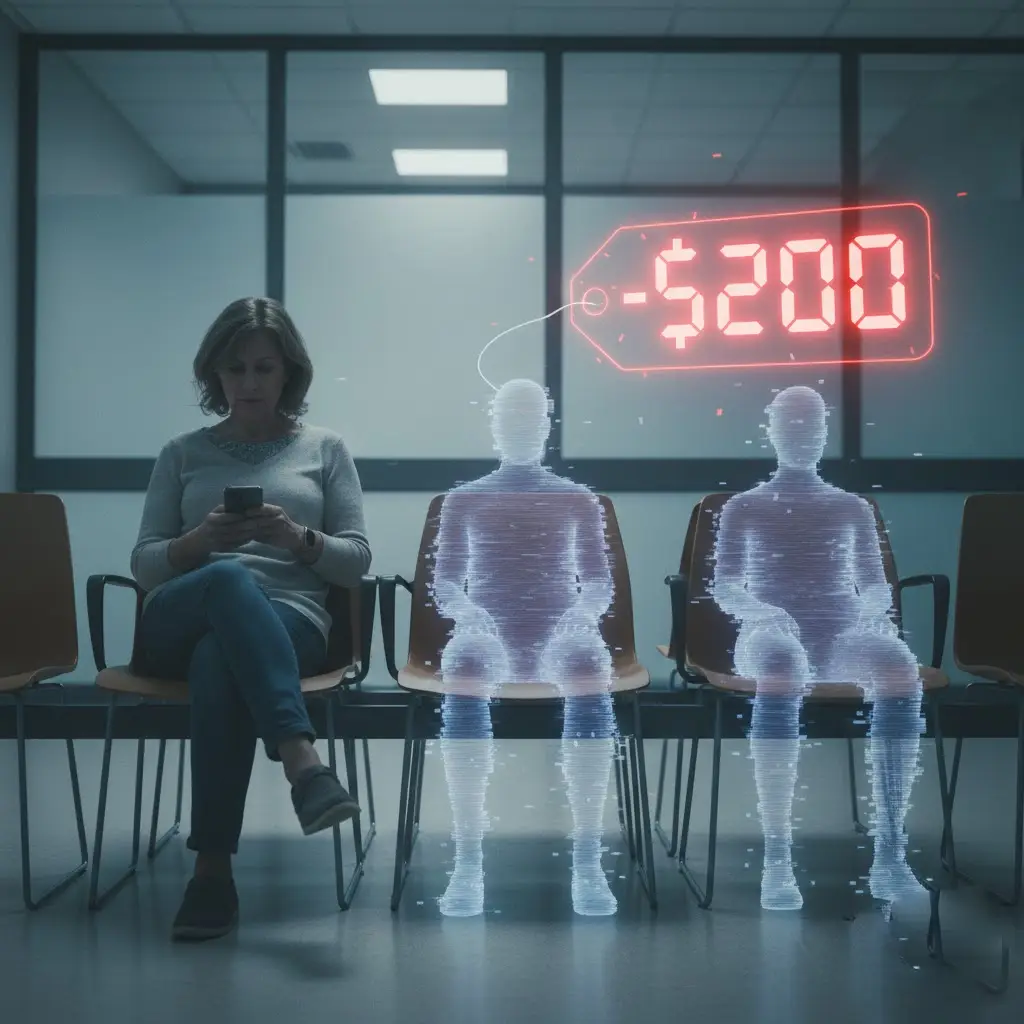
The financial impact of inefficiency is staggering. Industry data reveals that missed appointments cost the U.S. healthcare system approximately $150 billion annually. For an individual practice or clinic, the math is equally unforgiving: a single missed appointment represents an average loss of $200.
- The No-Show Epidemic: Average patient no-show rates currently range from 18% to 30%. In high-volume outpatient settings, this means nearly one in three reserved slots generates zero revenue while consuming fixed overhead costs.
- The Unanswered Call: The leakage isn't just from patients who don't show up; it's from patients who can't get in. During peak hours or shift changes, nearly 30% of inbound calls to clinics go unanswered.
- The Compounded Effect: Every missed call is a potential lost patient, and every no-show is unrecoverable revenue. In a low-margin environment, these "ghost slots" destroy profitability.
The Human Cost: Administrative Burnout
If revenue leakage is the silent killer of the business, burnout is the noisy crisis of the workforce. By 2025, reports indicated that 67-70% of healthcare professionals were experiencing substantial symptoms of burnout. The root cause often isn't clinical trauma, but administrative drudgery.
Front-desk staff currently spend 60-70% of their time on low-value, repetitive tasks—giving directions, reciting price lists, and confirming appointment times.This relentless "death by a thousand clicks" leads to
- High Turnover: Staff leave for less stressful roles in other industries, creating a perpetual hiring vacuum .
- Error-Prone Data Entry: Exhausted teams make mistakes, leading to billing denials and scheduling conflicts.
- Distracted Care: A team buried in phones cannot focus on the live patients standing in the lobby, degrading the in-person experience
The Fragmented Patient Experience
Patients today compare their hospital experience not to other hospitals, but to the seamless digital interactions they have with banks and e-commerce giants. Yet, in healthcare, they face a fragmented reality:
- The IVR Maze: Patients endure long hold times and complex "Press 1 for X" menus that rarely lead to quick answers.
- Lack of Instantaneity: In an era of instant gratification, the inability to get a simple answer about a lab report or a doctor's schedule leads to reduced Customer Satisfaction (CSAT) scores and a loss of loyalty to tech-savvy competitors.
The diagnosis is clear: the traditional human-only front desk is structurally incapable of meeting modern demand. The cure requires a new architectural approach.
The Strategic Shift: From Call Center to "Digital Front Desk"
The industry response to the "Triple Threat" has traditionally been a brute-force approach: hire more staff. Hospitals attempt to plug the revenue leak by adding more schedulers or outsourcing to distant call centers. However, adding headcount to solve a structural efficiency problem is a losing strategy—it drives up overhead without addressing the core volatility of patient demand.
The sustainable solution lies in a fundamental operational pivot: deploying AI and automation in healthcare to create a "Digital Front Desk" that never sleeps, never burns out, and never misses aThis is where VOXYLO enters the strategic picture .
VOXYLO is not merely a chatbot; it is a purpose-built AI neural agent designed to function as an extension of the hospital's administrative workforce By integrating Voice AI and WhatsApp automation, VOXYLO acts as the first line of defense for overwhelmed staff . It absorbs the high-volume, repetitive "noise" that currently paralyzes the front desk—handling appointment bookings, triage, FAQ resolution, and lab report delivery—with sub-second latency that mimics human conversation .
The shift here is profound.We are moving from a "human-first, tech-assisted" model to an "AI-first, human-escalated" model In this new paradigm, VOXYLO handles the 80% of routine interactions that require speed and accuracy, allowing human staff to focus entirely on the 20% of complex, high-empathy interactions that require clinical judgment.This is the only scalable way to eliminate the 30% unanswered call rate and ensure that patient access is truly 24/7.
Beyond Chatbots: The Architecture of Intelligent Automation in Healthcare
To the uninitiated C-Suite executive, all "AI bots" may look the same. This misconception is dangerous. There is a massive architectural chasm between a generic "customer service chatbot" and a clinically integrated Neural Agent like VOXYLO. The former creates frustration; the latter creates capacity.
The success of intelligent automation in healthcare hinges on three specific architectural pillars that VOXYLO utilizes to differentiate itself from standard market solutions:
The "Read/Write" HIS Integration
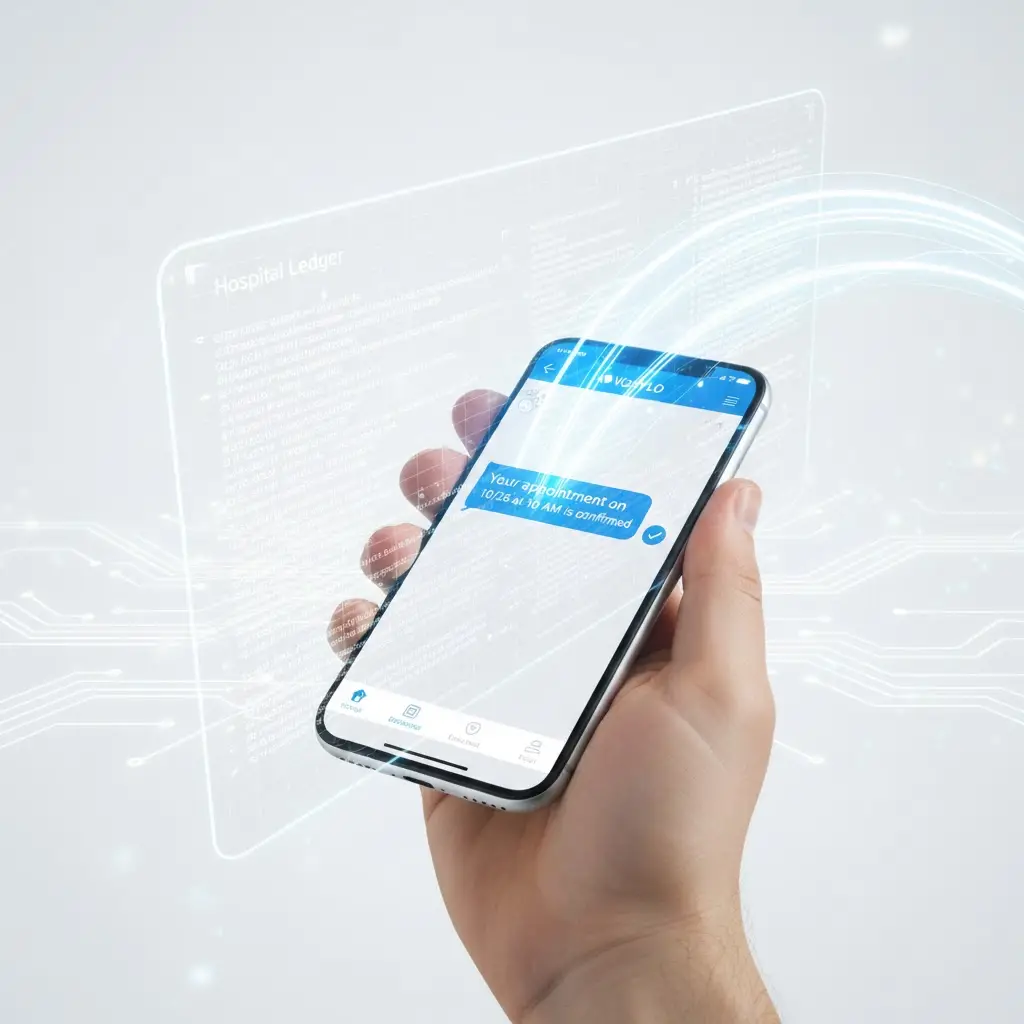
Most generic AI tools are "passive"—they can answer questions based on a script, but they cannot do anything. If a patient asks for an appointment, a passive bot says, "Please call this number."This solves nothing.VOXYLO operates on an "active" architecture, integrating deeply with the Hospital Information System (HIS) to gain Read/Write capabilities
- Read Access: The AI sees the doctor's live schedule, identifying open slots in real-time.
- Write Access: When a patient confirms a time, VOXYLO writes the appointment directly into the ledger, triggering confirmation SMS and email workflows instantly .
Context-Aware Triage & Workforce Orchestration
Healthcare scheduling is rarely linear; it requires triage. VOXYLO utilizes specialized medical logic to understand symptom urgency It doesn't just keyword-match; it assesses context . When the complexity exceeds programmed thresholds, the system executes a "warm handoff". For complex internal routing, the system aligns with tools like WHTAI to ensure the right on-call specialist is notified immediately.
The Post-Care Loop: Automated Discharge & Follow-up
The responsibility of the "Digital Front Desk" extends to when patients leave.VOXYLO creates a continuity of care by automating the delivery of lab reports and follow-up reminders via WhatsApp For clinical documentation, specialized tools like Medix generate precise discharge summaries, which VOXYLO then uses to remind patients to adhere to care instructions
The ROI Modeling: Hard Metrics for the CFO
When we discuss healthcare intelligent automation, we must move beyond qualitative discussions and focus on the hard quantitative levers that drive EBITDA. The financial impact of VOXYLO operates on two distinct vectors:
- The Efficiency Lever: VOXYLO reduces the requisite call center manpower load by approximately 60% by absorbing 80% of routine inbound traffic. This allows administration to redeploy existing human talent toward high-value tasks like insurance pre-authorization.
- The Growth Lever: By implementing automated WhatsApp/Voice confirmations, VOXYLO targets a recovery of 15-20% of potential lost revenue from empty slots. Furthermore, it ensures 100% lead capture, engaging every inquiry instantly, regardless of the hour.
Questions the C-Suite Will Ask
Before authorizing a digital transformation, every CEO and CIO has burning questions regarding the strategic reality of intelligent automation in healthcare.
1. Will this hallucinate and give my patients wrong medical advice?
No Unlike open-ended generative models, VOXYLO operates within "Guardrailed Medical Logic".It handles administrative triage and uses strict confidence thresholds.If a query is outside its scope, it triggers a "Safety Fallback" to a human nurse.It is a gatekeeper, not a doctor.
2. We have a legacy HIS/EHR. Can it actually integrate, or will this be a silo?
VOXYLO functions as a "headless" interface for your existing database Through API layers or RPA, it gains Read/Write access to your scheduling ledger, respecting your current source of truth.
3. What is the implementation timeline?
The "Digital Front Desk" follows a rapid 14-day protocol
- Week 1: API handshake and script calibration
- Week 2: Testing and accent recognition tuning.
- Day 14: Go-Live and immediate call flow takeover.
4. Will my older patients reject talking to a robot?
Data suggests frustration stems from poor automation, not the technology itself. VOXYLO uses natural voice AI and WhatsApp to meet patients where they are .For those who prefer humans, the system detects escalation requests and hands them off seamlessly.
5. Is this just cost-cutting, or does it actually improve care?
It improves care by removing friction. A patient who can book in 30 seconds at 9:00 PM gets treated sooner When nurses aren't answering 50 calls a day, they are monitoring patients Operational efficiency is clinical efficacy.
Conclusion: The Autonomy of the Future Hospital
We are standing at the precipice of a massive correction in healthcare operations. The era of the "waiting room"—both physical and digital—is ending. The hospitals that survive will be those with the most frictionless access, recognizing AI and automation as fundamental infrastructure rather than a luxury.
VOXYLO represents the first step toward the "Autonomous Hospital," where administrative friction is dissolved by code, allowing humans to do what they do best: heal. The technology is at your front door. The only question remaining for leadership is: Are you going to answer the call?
Ready to Plug the Silent Hemorrhage?
Transform your facility with a Digital Front Desk that recovers revenue and ends staff burnout.
Book Your Strategy Call Today