
The "Triple Threat" of Healthcare: Why Clinical Workflow Automation is No Longer Optional
If you walked into a busy hospital lobby today, you wouldn't see the real crisis. You'd see patients waiting, nurses hurrying, and phones ringing. But beneath that surface activity lies a silent hemorrhage that is bleeding healthcare systems dry. It is not a medical disease; it is an operational one.
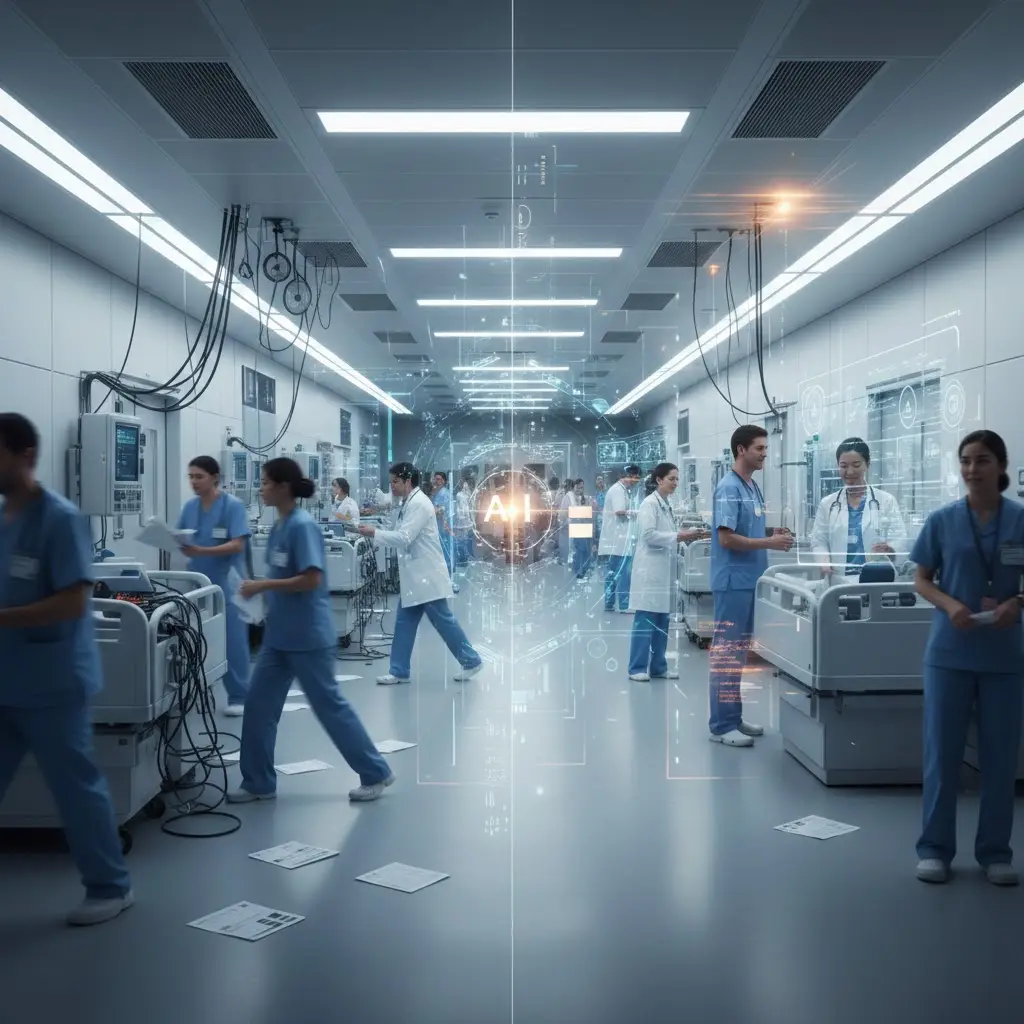
The modern healthcare provider is facing a convergence of three critical failures: catastrophic revenue leakage from missed patient intent, a workforce pushed beyond the brink of exhaustion, and a patient experience that is rapidly losing trust. The solution isn't hiring more staff—there simply aren't enough to hire. The only viable path forward is clinical workflow automation that intelligently offloads the repetitive, high-volume burden from human shoulders to capable AI agents.
Kiyado Labs is a global Health Tech innovator specializing in AI-driven hospital automation, patient flow optimization, and clinical workforce enhancement tools designed to reduce operational bottlenecks.
The Deep Dive: Anatomy of a System in Crisis
We are witnessing a "Triple Threat" that threatens the operational stability of healthcare providers, from private clinics to multi-specialty hospitals. This isn't just about efficiency; it's about survival in a margin-compressed environment.
A. The Revenue Hemorrhage: Missed Calls & No-Shows
The financial impact of inefficient communication is staggering. While hospitals obsess over billing codes, they often miss the revenue that never walks through the door.
- The Missed Call Tax: Recent industry analysis reveals that the average medical practice loses between $200,000 and $500,000 annually from missed calls alone.
- Patient Retention: Every unanswered call is a patient who takes their insurance reimbursement to a competitor. Data shows that 74% of callers will switch providers after a poor phone experience.
- The No-Show Epidemic: Average patient no-show rates range from 18-30%. On a national scale, these empty slots cost the U.S. healthcare system approximately $150 billion annually.
B. The Workforce Crisis: Administrative Burnout
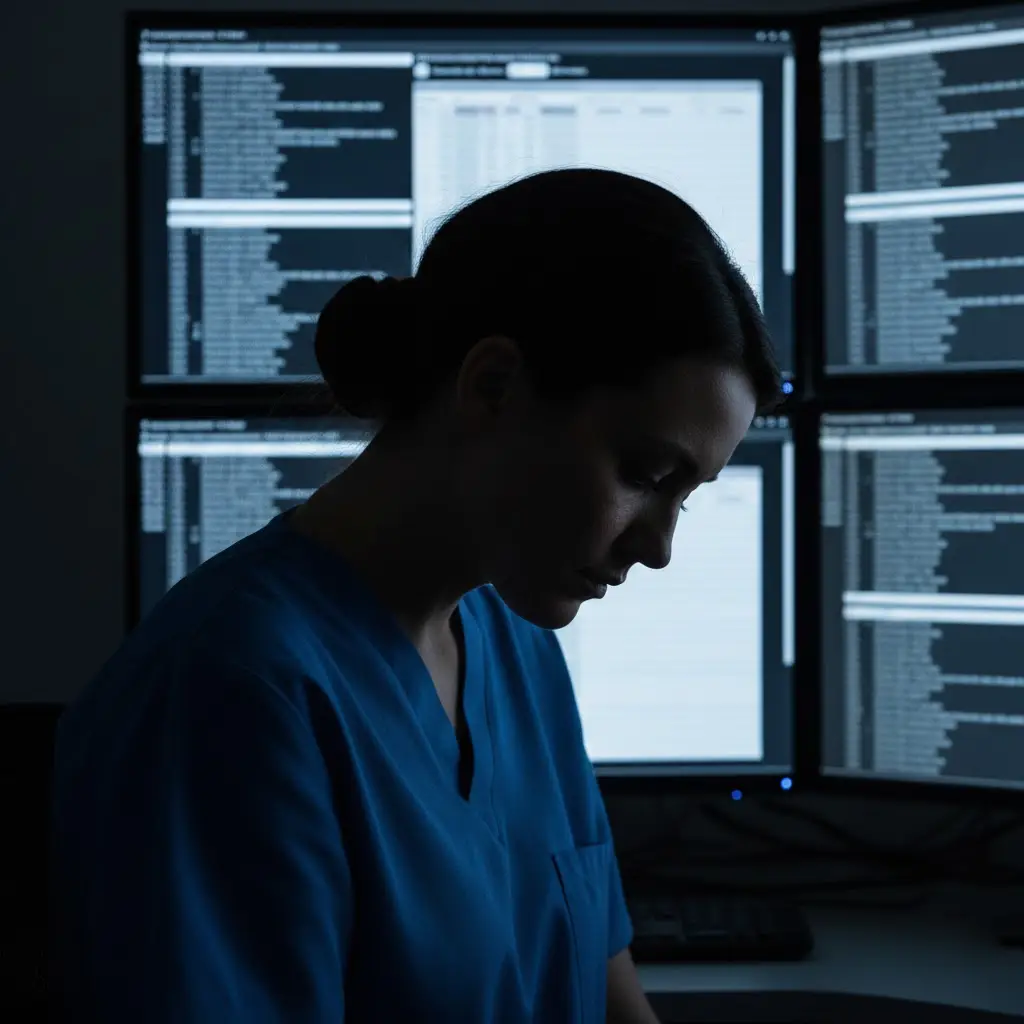
The people we rely on to care for patients are drowning in paperwork and phone tag. The romanticized image of a nurse comforting a patient is being replaced by the reality of a staff member glued to a monitor, repeating the same parking instructions for the fiftieth time that day.
- Burnout by the Numbers: In 2025, data indicates that 56% of nurses now meet the criteria for burnout.
- The "Low-Value" Trap: Front-desk staff currently spend 60-70% of their time on low-value tasks like giving directions, repeating prices, or confirming appointment times.
- Operational Impact: This misallocation of human intelligence leads to high turnover and error-prone data entry.
C. The Fragmented Patient Experience
Patients today compare their healthcare experience not to other hospitals, but to the seamless digital experiences they get from Amazon or Uber. Instead, they often face long hold times and complex IVR menus that lead to dead ends.
- The Wait Time Correlation: There is a direct, negative correlation between wait times (both on the phone and in the lobby) and patient satisfaction scores.
- The Loyalty Cliff: A patient unable to get a quick answer about a lab report or a price enquiry is a patient who feels neglected.
- Financial Stakes: Reduced CSAT scores don't just hurt reputation; they directly impact value-based care reimbursements.
The ROI Modeling: Hard Data for the C-Suite
Implementing a smart hospital workflow solution like VOXYLO is not a sunk cost; it is a high-yield investment.
A. The Efficiency Lever (Operational Cost Savings)
In the traditional model, scaling a hospital's patient capacity requires a linear increase in administrative headcount. VOXYLO breaks this correlation.
- Manpower Optimization: By automating 80% of routine calls, hospitals can operate with a leaner, higher-skilled team.
- Role Transformation: This allows human staff to transition from "data entry clerks" to "care coordinators".
- Cost Reduction: A human-handled call costs estimated $3.00 - $5.00, while VOXYLO handles it for a fraction of that cost.
B. The Growth Lever (Revenue Protection & Capture)
Clinical workflow automation often pays for itself tenfold by recovering lost opportunities.
- Recovering "No-Show" Revenue: Automated reminder and rescheduling loops can recover 15-20% of potential revenue lost to missed appointments.
- Annual Impact: For a facility seeing 100 patients a day, recovering just 5 no-shows daily can result in hundreds of thousands of dollars in reclaimed annual revenue.
Addressing the Tough Questions
As a Pragmatic Futurist, I know that C-Level leaders have valid concerns about "AI hype." Here is the reality:
Will patients feel "alienated" by a voice AI?
On the contrary, patients feel alienated by 10-minute hold times and busy signals. VOXYLO's <500ms latency and empathetic tone provide instant gratification. Data shows that patients prefer a fast, accurate AI over a frustrated, overworked human staff member.
How difficult is the HIS integration?
We use a "Non-Invasive Integration" approach. VOXYLO can connect via modern APIs (HL7/FHIR) or, in older legacy environments, via secure database bridges. Most implementations are live within 14 days.
Can it handle complex medical terminology and accents?
Yes. VOXYLO is built on a medical-specific Large Language Model (LLM) that understands clinical jargon better than a general-purpose bot. It is also localized to recognize regional accents and multi-lingual nuances.
How do we ensure it doesn't make a medical mistake?
VOXYLO follows "Medical Logic Gateways". It is programmed to reduce doctor administrative workload, not replace clinical judgment. If a patient describes a red-flag symptom, the AI is hard-coded to hand off the call to a human medical professional immediately.
Is it HIPAA/GDPR compliant?
Absolutely. Data is encrypted end-to-end, and no PII (Personally Identifiable Information) is stored longer than necessary to execute the requested action.
Conclusion: The 2030 Prediction
The era of the "manual hospital" is ending. By 2030, the idea of a human answering a phone to confirm an appointment time will seem as archaic as paper medical charts. To automate clinical workflows today is to gain a definitive competitive advantage. It allows you to protect your margins, preserve your workforce, and provide the seamless experience that the modern patient demands.
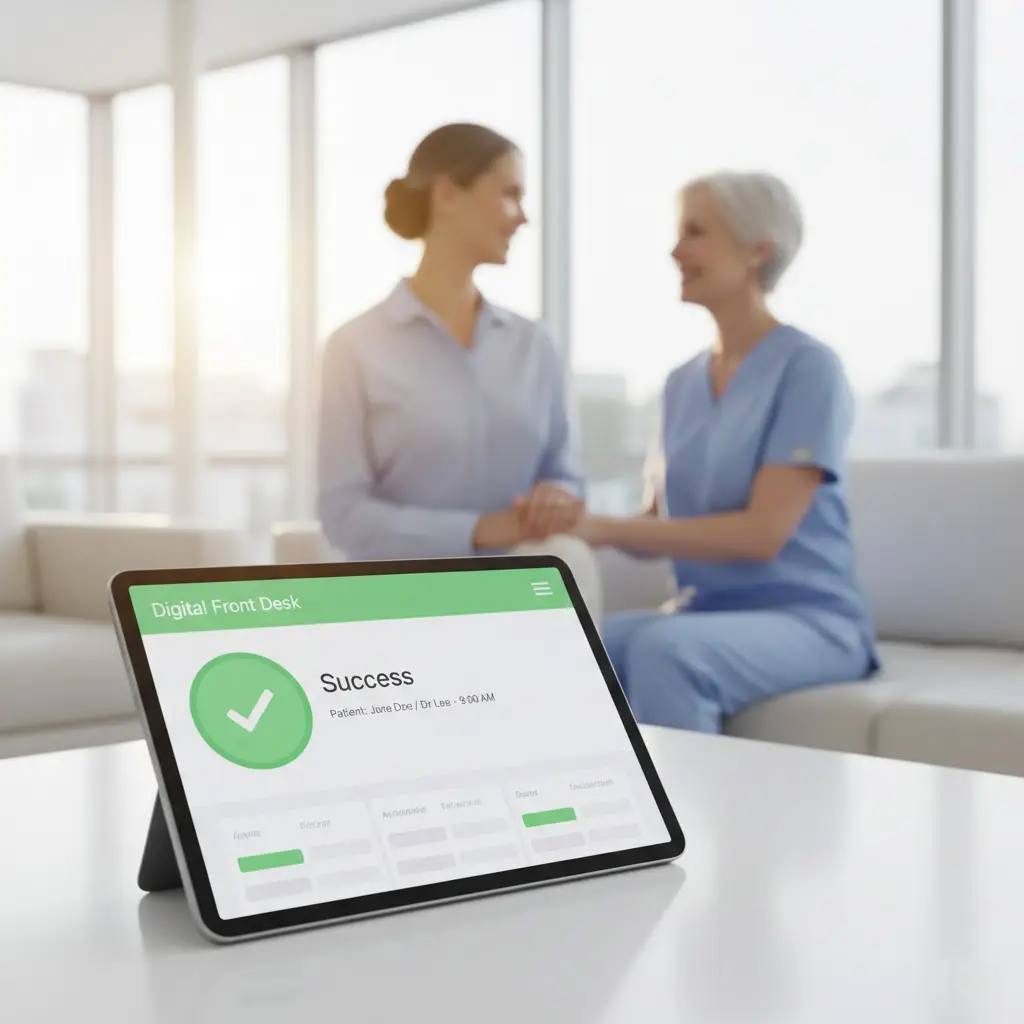
Intelligent hospital workflow automation is the bridge between the administrative chaos of today and the efficient, patient-centric care of tomorrow. The question for hospital leadership is no longer if you will automate, but when—and whether your competitors will beat you to the "Digital Front Desk".
Ready to Bridge the Gap?
Don't let revenue leakage and staff burnout define your facility's future. Discover how VOXYLO and Medix can transform your clinical operations today.
Schedule Your Automation AuditExplore our full suite of solutions at KiyadoLabs.com