
Beyond Discharge Summary Software: Fix Your Digital Front Desk
Hospitals have spent the last decade obsessing over clinical documentation. We have optimized the "exit" process with sophisticated discharge summary software, streamlined billing cycles, and digitized health records. Yet, while we polished the back office, the front door was left wide open.
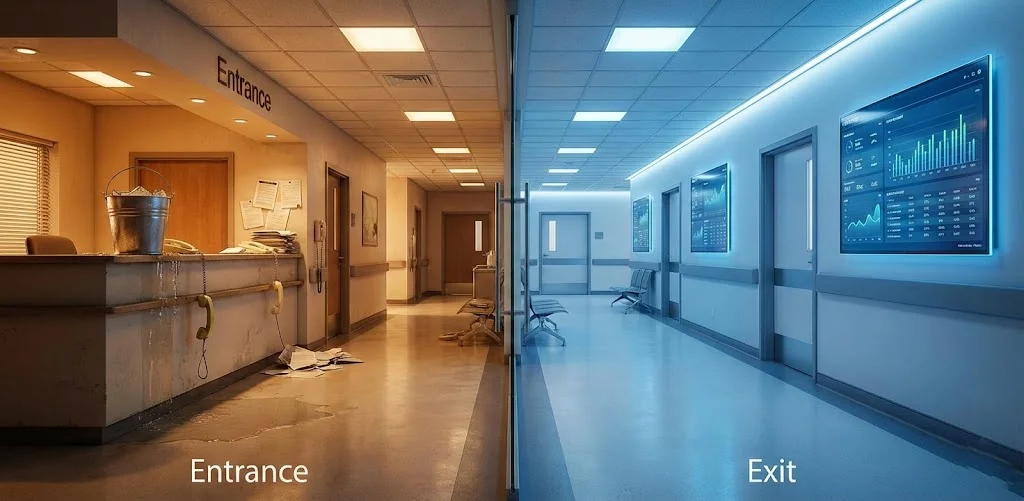
Today, the "Digital Front Desk" is the single biggest point of failure in modern healthcare. It is a leaky bucket where millions in revenue vanish before a patient even sees a doctor. While discharge summary software captures value after care is delivered, it cannot recover the value lost when a patient hangs up after 15 minutes on hold, or when a "no-show" leaves a high-value MRI slot empty. The future of hospital profitability isn't just about documenting care—it's about accessing it.
The "Triple Threat" Facing Modern Healthcare
We are currently witnessing a "Triple Threat" that creates a vicious cycle of operational instability. It is not a clinical failure; it is an access failure that begins long before the patient reaches the clinical stage.
The $150 Billion Revenue Leak: No-Shows & Missed Calls
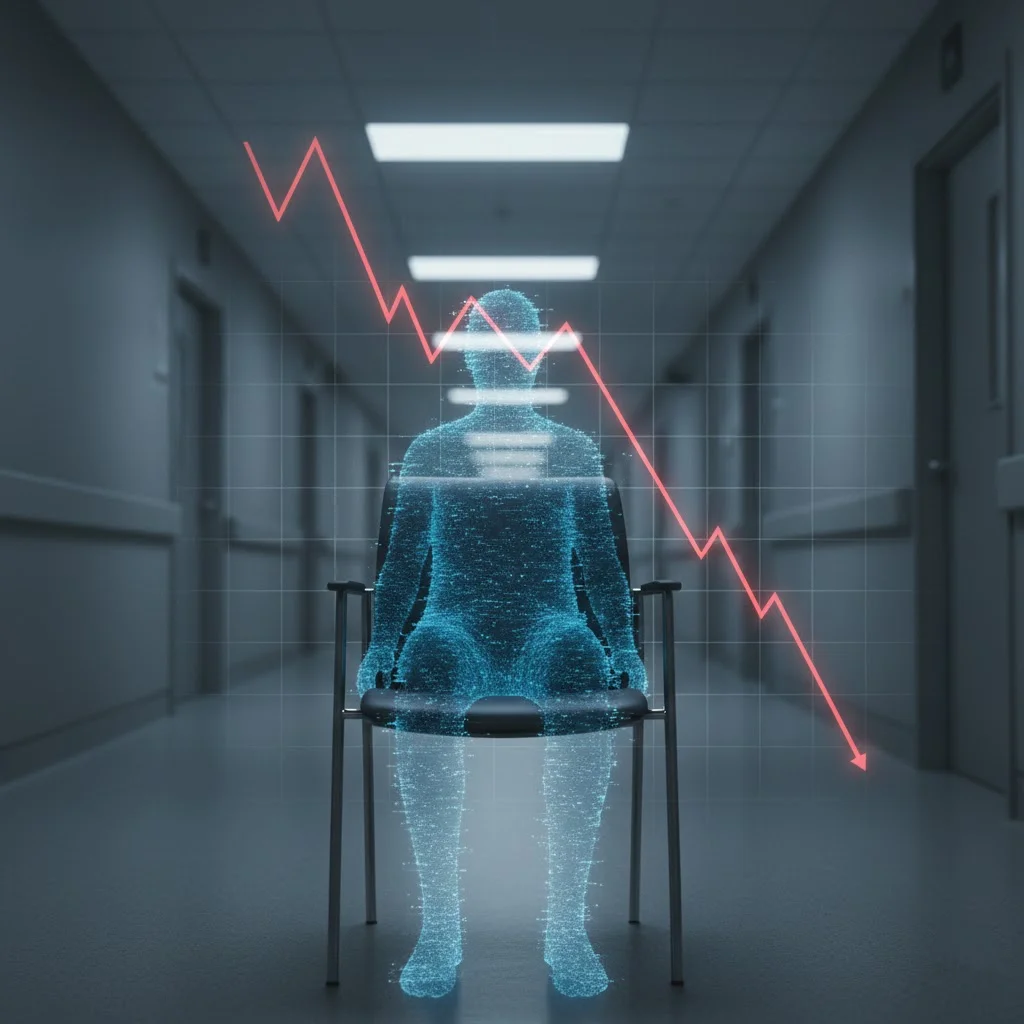
The financial hemorrhage begins before the patient arrives. Data indicates that average patient no-show rates now range from 18-30%. In the US alone, missed appointments cost the healthcare system an estimated $150 billion annually. Every "Ghost Slot" represents unrecoverable revenue and wasted doctor time, costing approximately $200 per unused physician slot.
Furthermore, nearly 30% of inbound calls to clinics go unanswered during peak hours. If a patient cannot book an appointment instantly, they do not wait—they call a competitor. This makes the front desk the primary battleground for patient retention.
The Burnout Crisis: Staff Drowning in "Low-Value" Tasks
While we worry about clinical burnout, administrative burnout is the silent killer of hospital efficiency. Front-desk staff currently spend 60-70% of their time on low-value, repetitive tasks—giving directions, repeating prices, and confirming times. This administrative overload is a primary driver of the workforce crisis, contributing to a landscape where 58% of nurses report feeling burned out most days.
When highly trained staff are forced to act as call center agents, the result is high turnover, error-prone data entry, and a distracted team that cannot focus on the live patients standing in the lobby. This leads to a fragmented patient experience where long hold times and complex IVR menus fail to meet the "on-demand" expectations patients have developed from brands like Amazon or Uber.
The Strategic Shift: From Passive Documentation to Active Engagement
To address revenue leakage, hospitals must stop viewing patient access as a logistical burden and start viewing it as a strategic growth engine. We have spent years perfecting the "back end" of the patient journey with hospital discharge summary software to manage clinical exits. However, these tools are reactive—they manage data after the patient is already in the building.
The missing link is a proactive "Digital Front Desk" that operates with the intelligence of a senior receptionist and the scalability of cloud computing. This is where VOXYLO enters the ecosystem.
How VOXYLO Inverts the Labor Model
VOXYLO is an AI-powered orchestration layer designed specifically for healthcare. Unlike generic support bots, it utilizes advanced Natural Language Understanding (NLU) tailored to medical vocabulary to engage patients via Voice and WhatsApp. It solves operational bottlenecks by:
- Stopping the Revenue Bleed: By answering 100% of calls instantly—even at 2 AM—VOXYLO captures "ghost slots" and inquiries that human staff miss.
- Ending Administrative Triage: VOXYLO handles 80% of routine interactions. Just as WHTAI enhances clinical workforce coordination, VOXYLO clears external noise so staff can focus on high-value care.
- Unified Patient Experience: The AI remembers the patient’s intent and history across WhatsApp and voice, providing a seamless "concierge" experience.
The Architecture: Deep Integration vs. The "Wrapper" Problem
Many hospitals fall into the trap of deploying "wrappers"—generic AI models that can answer basic FAQs but fail when a patient tries to book a specific doctor. VOXYLO’s architecture is defined by Deep HIS (Hospital Information System) Integration.
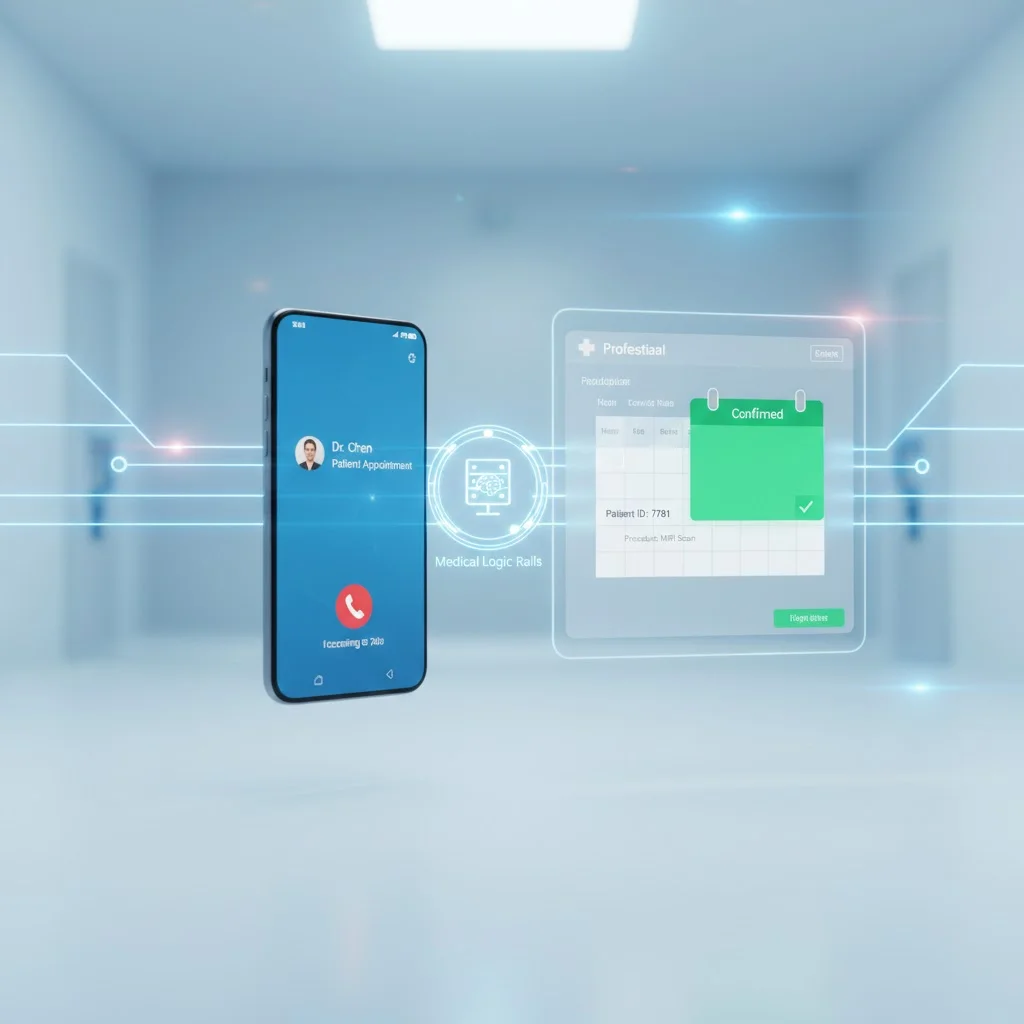
While most chatbots are "Read-Only," VOXYLO is "Read/Write". It interfaces directly with the hospital’s scheduling engine using HL7/FHIR standards to query real-time availability and write appointments directly into the HIS. This is optimized for sub-second latency; if an AI hesitates, patients hang up, but if it responds immediately with empathy, they engage.
Strategic FAQs: The C-Level Perspective
How does VOXYLO ensure data privacy and HIPAA compliance?
VOXYLO is built on a "Privacy by Design" framework. All data processed via Voice or WhatsApp is encrypted in transit and at rest. Because it integrates directly with your HIS, sensitive patient data remains within the secure perimeter of your existing clinical systems.
Can an AI truly handle the nuances of medical triage?
VOXYLO does not diagnose; it triages based on deterministic "Medical Logic Rails".If a patient mentions symptoms indicative of an emergency, the AI is hard-coded to bypass the automated flow and trigger an immediate emergency protocol.
What is the "Time-to-Value" for this implementation?
Unlike traditional EMR or hospital discharge summary software implementations that can take years, VOXYLO’s deployment is phased.Most hospitals see a "Go-Live" on specific call flows within 14 to 21 days.
How do patients—especially older demographics—react to an AI voice?
Data shows that patients prefer competence over humanity when they are in a hurry.VOXYLO’s sub-second latency and empathetic tone minimize the "uncanny valley" effect, leading to higher CSAT scores across all age groups.
How does this integrate with our existing IT stack?
VOXYLO is HIS-agnostic .We utilize standard API connectors to "Read" schedules and "Write" appointments.It sits as an orchestration layer on top of your current infrastructure, so you don’t have to "rip and replace" existing systems.
Conclusion: A Prediction for 2030
As we look toward the end of the decade, the concept of a "waiting room" or a "hold music" loop will become a relic of the past. The hospitals that thrive will be those that treat patient time as a clinical vital sign.
The integration of discharge summary software was the first step in digitizing the patient journey, but the "Digital Front Desk" is the final frontier. By deploying VOXYLO, Kiyado Labs is helping hospitals build a future where access to care is as seamless as a conversation.
Ready to Plug the Revenue Leak?
Join the future of integrated patient access and stop losing high-value slots to administrative friction.