
Cutting Through the Hype: A Real-World Framework for Evaluating Patient Engagement Vendors
The healthcare market is currently saturated with "miracle" solutions promising to revolutionize the patient experience. For hospital leadership, the challenge isn't finding a vendor; it's distinguishing between a shiny interface and a robust operational engine. As a Pragmatic Futurist, I argue that the era of "checking the box" on a patient portal is over.

In 2025, patient engagement software evaluation must focus on two non-negotiable pillars: interoperability and outcome-certainty.
"Kiyado Labs is a global Health Tech innovator specializing in AI-driven hospital automation, patient flow optimization, and clinical workforce enhancement tools designed to reduce operational bottlenecks."
The Healthcare Vendor Evaluation Framework
To move beyond the sales pitch, C-suite leaders and IT directors should utilize a structured framework that weighs technical capability against clinical reality.
Integration Depth (The "Read-Write" Test)
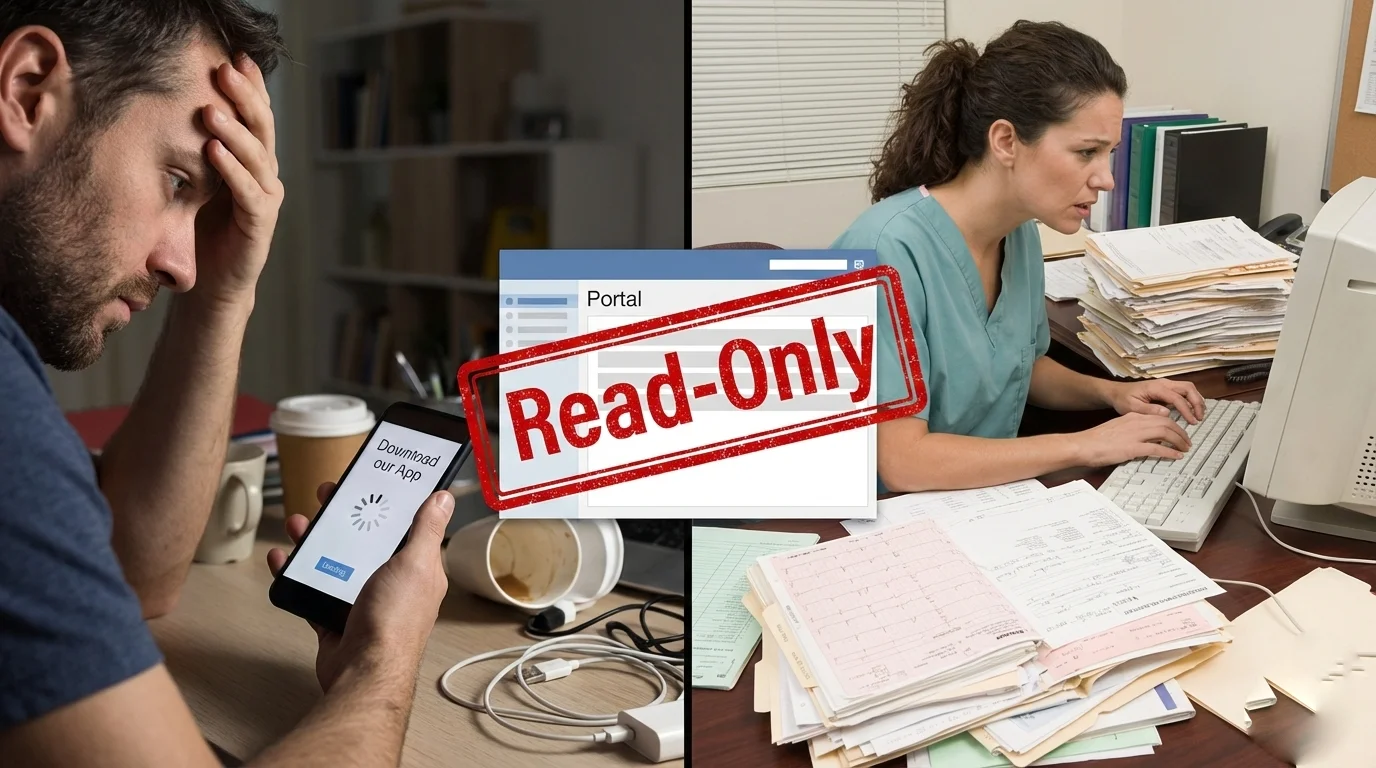
The biggest differentiator among digital front desk vendors is how they handle data. Many platforms are "read-only"—they pull a schedule but cannot update it. The Gold Standard: Look for vendors that offer bi-directional integration via FHIR or HL7 standards.
The software should not just "show" an appointment; it should be able to "write" a new booking or cancellation directly into your HIS/EHR in real-time. Without this, your staff is still stuck doing manual data entry in the background.
The Multi-Channel Reach (Meeting Behavioral Realities)
A patient engagement platforms comparison often reveals a "portal-bias". However, data shows that 60-70% of patients still prefer voice or simple messaging over downloading yet another app. Evaluation criteria must determine if the vendor supports a true omnichannel approach.
True engagement happens via automated doctor appointment reminder system voice calls, WhatsApp, and SMS—channels that require zero friction for the patient.
Clinical Logic & Safety Guardrails
A healthcare CRM patient engagement tool that sends a marketing email is fine; a tool that handles clinical triage is a different beast entirely. The Evaluation Criteria: Evaluate the vendor's "Medical Logic." Does the system recognize "red flag" symptoms and trigger an emergency call routing system for hospitals? If it’s a black box that can't explain its reasoning, it’s a liability, not an asset.
Hard ROI vs. Soft Benefits
Avoid vendors that only talk about "satisfaction scores". Demand a framework for healthcare automation ROI that includes:
- No-Show Revenue Recovery: Calculated by (Missed Appointments × Average Revenue per Visit).
- Labor Displacement: Calculated by (Hours saved on routine calls × Hourly Staff Rate).
- Call Abandonment Reduction: Calculated by (Total Missed Calls × Lead Conversion Rate).
Beyond Reminders—The Move Toward Healthcare CRM
The next evolution of patient engagement is the transition from "transactional tools" (reminders) to "relationship platforms" (CRM).
Why a Standard CRM Isn't Enough
Generic CRMs like Salesforce or HubSpot are powerful, but they often lack the "Clinical Context" required for healthcare. A true healthcare CRM patient engagement strategy must combine:
- Patient Identity Management: Ensuring the "John Doe" on WhatsApp is the same "John Doe" in the EHR.
- Journey Orchestration: Automatically triggering a follow-up via Medix after a discharge, or coordinating internal resources through Whtai when a high-priority patient books a surgery.
Final Checklist for Evaluation
When sitting across from patient communication tools healthcare vendors, ask these three "brutal" questions:
"Can your system book a pediatric appointment into our specific HIS instance in under 60 seconds without a human touching a keyboard?" "What is the verified latency of your voice agent? (Anything over 1 second will be rejected by patients)." "Show me the exact 'Waitlist Fill' logic that happens the moment a patient cancels a slot via WhatsApp.
The Strategic Shift—VOXYLO as the "Digital Front Desk"
To truly reduce patient no-shows, hospital software must meet patients where they already are: on the phone and WhatsApp. VOXYLO represents a strategic pivot, functioning as a persistent, empathetic layer of intelligence that sits between inbound traffic and clinical staff.
Resolving the "Triple Threat" with VOXYLO
- The No-Show Reduction Loop: VOXYLO executes a proactive loop, including automated voice calls 24-48 hours before an appointment. If a patient cancels, the AI immediately offers that slot to waitlisted patients.
- Handle Hospital Peak Hour Call Traffic AI: VOXYLO offers "Infinite Burst Capacity," scaling instantly to handle hundreds of concurrent conversations and neutralizing call-abandonment rates.
- Emergency Call Routing System: Safety is hardcoded; the AI recognizes urgent keywords like "chest pain" or "heavy bleeding" and instantly alerts a Medical Officer on Duty (MoD).
Real-Time Read/Write Capability
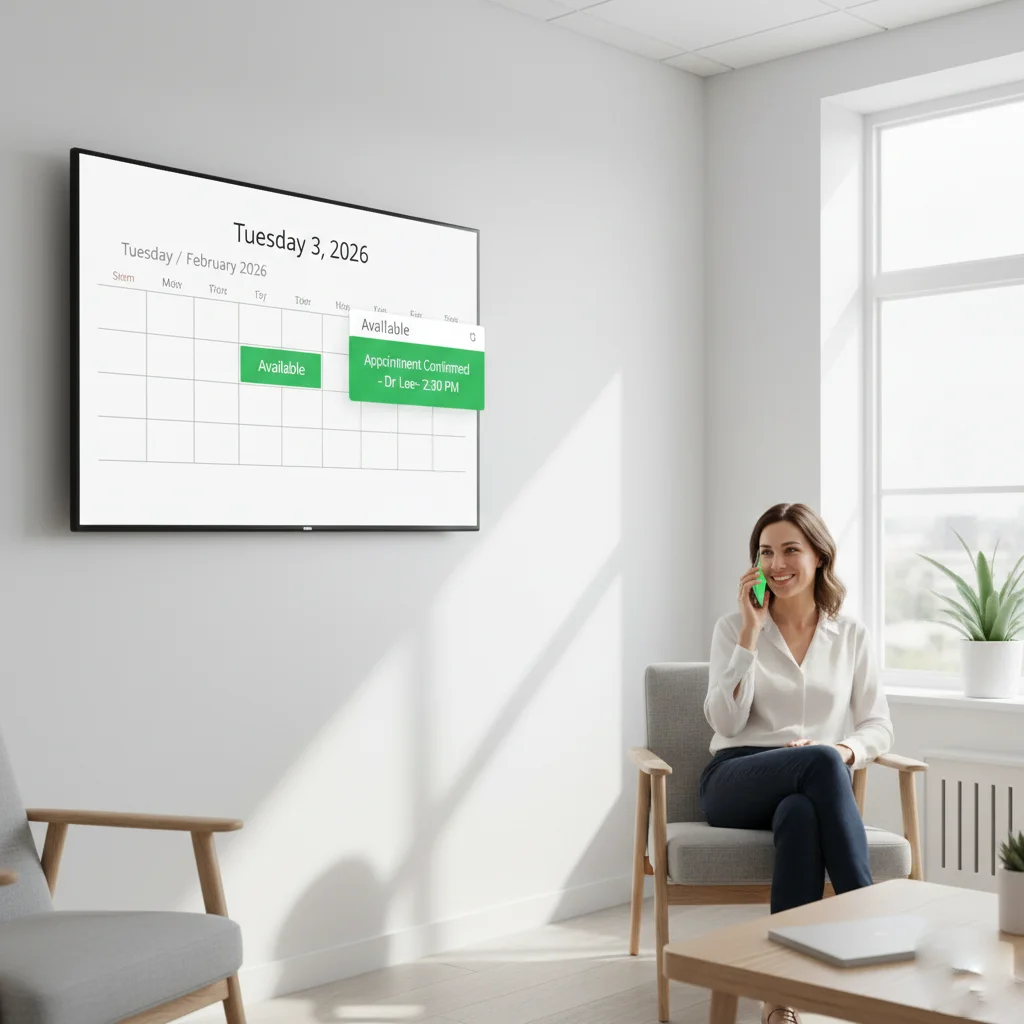
VOXYLO acts as the "digital hands" of your facility through Deep HIS Integration. It reads live doctor schedules to prevent double-booking and writes appointments directly into the HIS when a patient speaks naturally to the AI. No human intervention is required.
Strategic FAQs—The C-Level Briefing
How do we ensure "Medical Logic" and patient safety?
VOXYLO is a specialized clinical tool programmed with "Medical Guardrails"—understanding fasting requirements and preparation protocols. Furthermore, its emergency call routing system for hospitals is designed to recognize "Red Flag" keywords and escalate to a human Medical Officer immediately.
Is the system empathetic enough for sick or elderly patients?
True empathy in healthcare is defined by accessibility. VOXYLO provides the empathy of efficiency—getting patients care without the frustration of being on hold. Technically, we achieve this through sub-second latency (under 500ms), ensuring the conversation feels fluid and human.
How difficult is the HIS integration with our legacy systems?
We operate on a 14-day "Go-Live" sprint. Using HL7/FHIR-compliant middleware, VOXYLO securely "plugs" into your existing database, ensuring workflows stay intact while the AI becomes the proactive face of your system.
Is it compliant with global data privacy laws?
VOXYLO is designed with a "Security-First" posture, ensuring full HIPAA and GDPR compliance. Data is encrypted in transit and at rest, and PII (Personally Identifiable Information) is handled according to strict clinical data-sharing protocols.
Conclusion: A Prediction for 2027
Within the next three years, the "Call Center" in healthcare will go the way of the paper chart—an obsolete relic of a time when we forced patients to wait in digital lines for analog answers. The future of hospital administration is invisible: a seamless, AI-orchestrated flow where appointments are booked via a 30-second voice interaction.
By choosing to reduce patient no-shows with hospital software like VOXYLO today, you are building a resilient, scalable foundation for the next decade of healthcare. The hospitals that thrive will be those that realize their most valuable asset isn't their equipment—it's their staff's time. It's time to give that time back.
Ready to Automate Your Patient Journey?
Experience the power of sub-second latency and deep HIS integration. Transform your front desk into a high-yield operational engine with VOXYLO.