The Efficiency Gap: Why You Must Reduce Patient No-Shows Hospital Software to Survive 2025
The modern hospital currently exists as a paradox: a hub of high-tech clinical miracles stalled by low-tech administrative paralysis. While robotic-assisted surgeries advance, the "front door" remains guarded by overwhelmed staff struggling with manual clipboards and ringing phones. This friction has created a "Triple Threat" to sustainability: revenue leakage from no-shows, workforce burnout, and a patient population that refuses to be put on hold
"Kiyado Labs is a global Health Tech innovator specializing in AI-driven hospital automation, patient flow optimization, and clinical workforce enhancement tools designed to reduce operational bottlenecks."
Operational inefficiency is no longer just a minor error; it is a solvency risk[cite: 8Nationally, the U.S. healthcare system loses approximately $150 billion annually due to missed appointments, with individual missed visits costing practices between $200 and $265.Finding effective software to reduce patient no-shows has transitioned from a convenience to a board-level priority.To survive 2025, hospitals must move beyond generic chatbots toward specialized systems that ensure clinical safety and administrative precisio.
The High Cost of Silence and Empty Slots
Patient no-shows are the silent killers of hospital margins, with typical rates ranging from 18% to 30%. Even in specialized settings like vascular labs, a modest 12% no-show rate can translate to a loss of nearly $89,000 per year. The cost isn't just an empty chair; it's the wasted fixed costs of physicians, rooms, and equipment that remain active regardless of patient attendance.
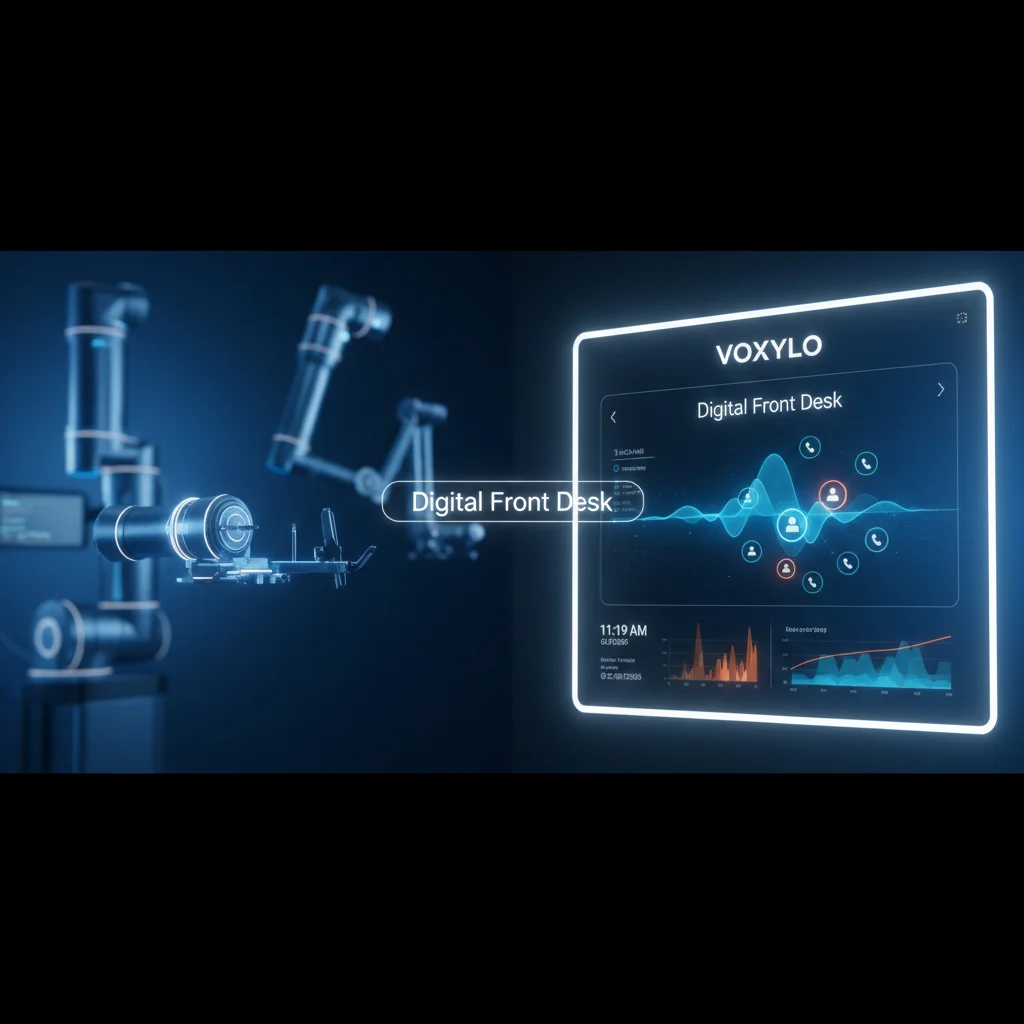
Simultaneously, the administrative burden is reaching a breaking point. Front-desk staff spend 60-70% of their time on repetitive tasks like manual appointment confirmations or giving directions. This contribute to a staggering 62% burnout rate among nurses and over 57% among primary care physicians. By implementing a "Digital Front Desk" through VOXYLO, hospitals can meet patients on the phone and WhatsApp to resolve these issues before they impact the bottom line.
The Communication Void: Why Traditional Call Centers Fail
The primary channel for patient contact remains the phone, accounting for roughly 80% of appointments. However, the traditional call center model is failing healthcare providers; studies indicate that hospitals miss approximately 24% of incoming calls, while smaller medical offices miss up to 42% during business hours. This accessibility gap is costly: 60% of patients will abandon a call if forced to wait longer than one minute. In an urgent care setting, a clinic averaging 20 missed calls per day faces nearly $950,000 in annual losses.

To address this, hospitals require a system capable of handling peak hour traffic without increasing human headcount VOXYLO serves as this strategic pivot, automating the front desk by meeting patients where they already are: on the phone and WhatsApp It functions as a persistent, empathetic layer of intelligence that resolves calls rather than just managing them.
Resolving the "Triple Threat" with VOXYLO
VOXYLO tackles operational risks through three core mechanisms designed for the high-stakes medical environment:
- The No-Show Reduction Loop: Unlike manual reminders, VOXYLO executes proactive voice reminders 24-48 hours before an appointment. If a patient cancels, the AI immediately offers that slot to waitlisted patients to ensure no revenue is lost.
- Infinite Burst Capacity: To handle hospital peak hour call traffic, the system manages 100% of inbound traffic simultaneously. This ensures zero missed calls and zero hold times, whether it is 10:00 AM on a Monday or 2:00 AM on a holiday.
- Emergency Call Routing: Safety is hardcoded into the logic. The AI recognizes urgent medical keywords like "chest pain" or "heavy bleeding" and instantly bypasses automation to alert a Medical Officer on Duty (MoD).
The Architecture of Integration: Beyond the Surface FAQ
The fatal flaw of generic AI tools is their isolation; a chatbot that cannot "do" is simply another hurdle for a frustrated patient. VOXYLO’s power lies in its Deep HIS Integration, acting as the "digital hands" of a facility.
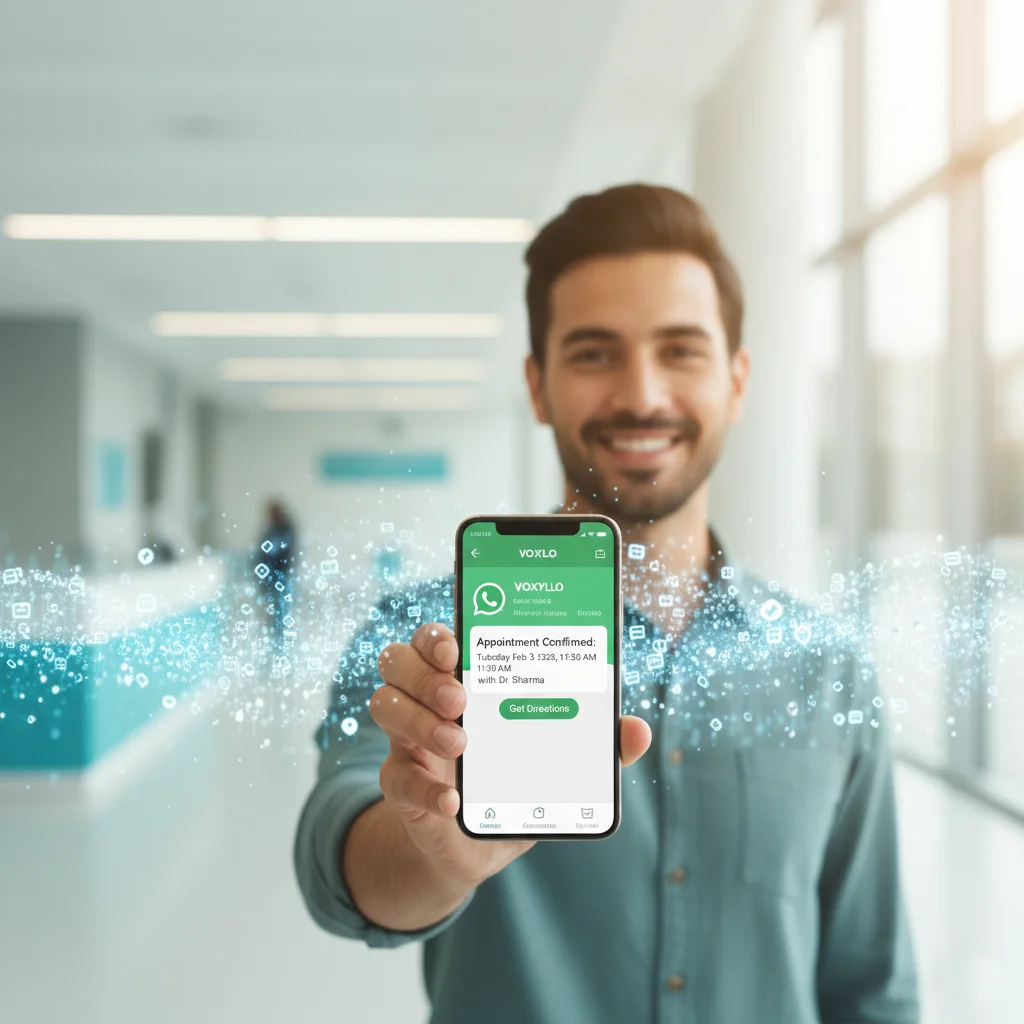
Through a robust API gateway supporting HL7 and FHIR standards, VOXYLO interacts directly with the Hospital Information System (HIS).It reads live doctor schedules and OPD rounds to ensure it only offers valid time slots, preventing the "double-booking" nightmare common with manual entry When a patient speaks naturally to the AI, it parses that intent, negotiates the slot, and writes the appointment directly into the HIS in real-time with no human intervention required.
A Multi-Modal Ecosystem for Frictionless Care
Efficiency doesn't stop at the front desk. To achieve a truly frictionless hospital, VOXYLO integrates into a wider ecosystem of automation provided by Kiyado Labs:
- Post-Discharge Continuity: Integrating with Medix ensures that follow-up care, medication adherence, and discharge instructions are handled with automated precision.
- Internal Coordination: While VOXYLO manages the patient-facing side, Whtai can be leveraged to coordinate internal staff movements, such as porter requests or nurse assignments.
- Technical Superiority: To maintain patient trust, VOXYLO utilizes ultra-low latency engines to process speech in less than 500ms, ensuring conversations feel natural and human-like.
The C-Level Briefing
How do we ensure "Medical Logic" and patient safety?
VOXYLO is a specialized clinical tool programmed with "Medical Guardrails" to understand fasting requirements and preparation protocols. Its emergency routing system is specifically designed to recognize "Red Flag" keywords like "shortness of breath" and escalate to human medical officers immediately.
Is the system empathetic enough for sick or elderly patients?
Through sub-second latency (under 500ms) and specialized voice synthesis, the system avoids the "uncanny valley". In healthcare, true empathy is defined by accessibility—getting patients the care they need without the frustration of being put on hold.
How difficult is the HIS integration with existing legacy systems?
We operate on a 14-day "Go-Live" sprint using HL7/FHIR-compliant middleware. VOXYLO doesn't replace your HIS; it securely plugs into your existing database to make it actionable via voice and WhatsApp.
Is it compliant with global data privacy laws?
VOXYLO maintains a "Security-First" posture, ensuring full HIPAA and GDPR compliance. Data is encrypted both in transit and at rest, and PII is handled according to strict clinical data-sharing protocols.
What happens during "Peak Hour" surges?
Unlike human staff who can handle one call at a time, VOXYLO’s cloud architecture allows for "Infinite Bursting". It can handle surges of hundreds of concurrent calls with zero degradation in performance or accuracy.
Conclusion: A Prediction for 2027
By 2027, the traditional healthcare "Call Center" will become an obsolete relic, replaced by seamless, AI-orchestrated flows. Appointments will be booked via 30-second voice interactions, and lab reports will be delivered via WhatsApp before a patient even thinks to ask. By adopting VOXYLO today, hospitals are building a resilient, scalable foundation for the next decade. The thriving hospitals of the future will be those that realize their most valuable asset isn't their equipment—it's their staff's time. It's time to give that time back.
Protect Your Margins & Patient Safety
Ready to eliminate the "Triple Threat" of no-shows, burnout, and missed calls?
Book your Demo