
The Self-Scheduling Gap: Why You Must Reduce Patient No-Shows with Hospital Software Now
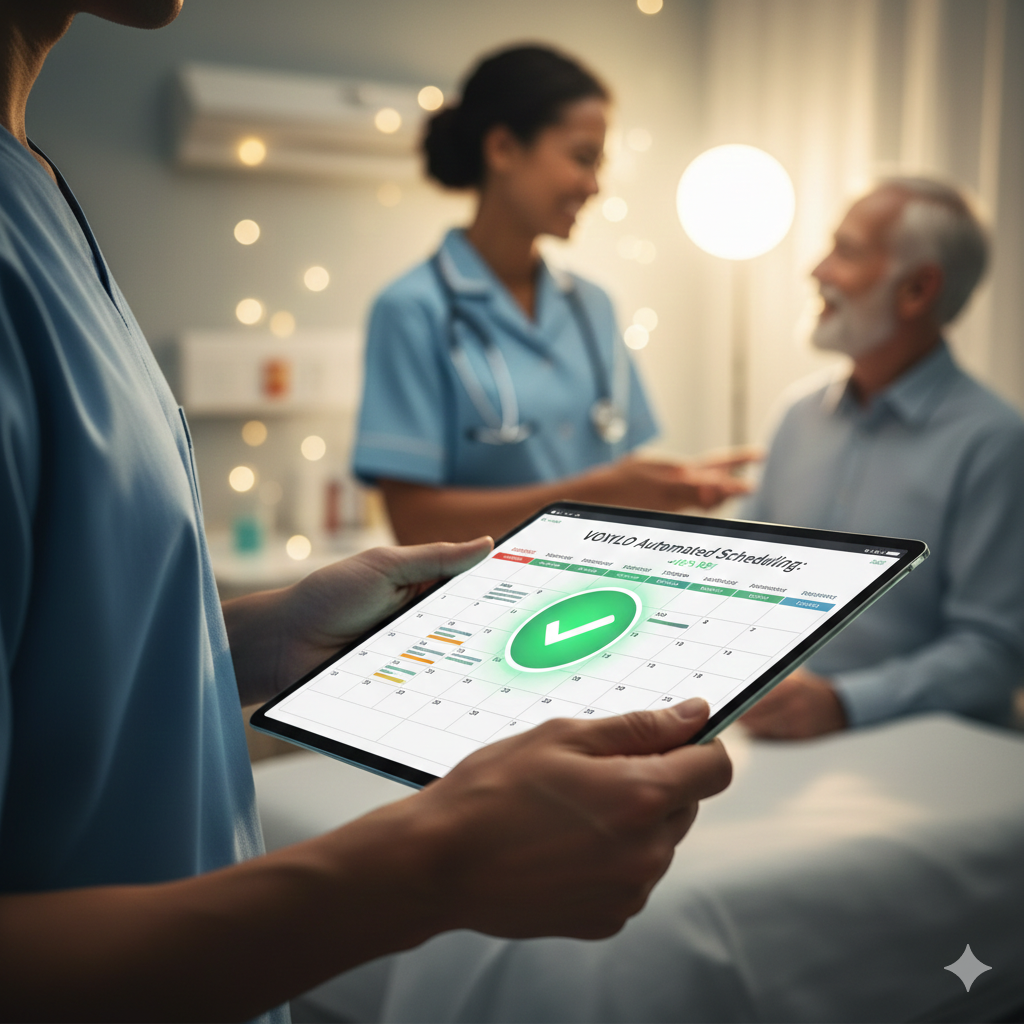
The modern healthcare system is currently vibrating under the frequency of a "Triple Threat": staggering revenue leakage, a workforce at its breaking point, and a patient population that has outpaced hospital technology.
We are no longer in an era where "good enough" administration suffices. In 2025, an empty chair in a waiting room isn't just a scheduling hiccup; it is a systemic failure of the digital front door. To bridge the gap between patient expectations and organizational reality, we must first confront the brutal data defining our current operational crisis.
"Kiyado Labs is a global HealthTech innovator specializing in AI-driven hospital automation, patient flow optimization, and clinical workforce enhancement tools designed to reduce operational bottlenecks."
The Deep Dive into the Healthcare "Triple Threat"
1. The $150 Billion Hemorrhage: Revenue Leakage via No-Shows
While clinicians focus on outcomes, the C-Suite is focused on a different kind of survival. Recent industry data confirms that patient no-shows and last-minute cancellations cost the U.S. healthcare system a staggering $150 billion annually. For an individual practice, this translates to an average loss of $150,000 per year, per provider.
The anatomy of this loss is twofold:
- Direct Revenue Loss: Every missed appointment is a wasted slot that cannot be recovered. In primary care, where missed appointment rates can climb as high as 43%, the financial impact is immediate and devastating.
- The "Leakage" Effect: When patients face friction in scheduling—such as long hold times—they don't just wait; they leave. Research shows that 74% of callers will switch providers after a single poor phone experience.
2. The Administrative Breaking Point: 2025 Burnout Realities
We are asking our front-desk staff to perform a Herculean task with tools from the previous decade. As of early 2025, 65% of nurses and a significant portion of administrative staff report high levels of stress and burnout.
The "busy work" is the primary culprit. Front-desk staff currently spend 60-70% of their time on low-value, repetitive tasks like giving directions, repeating price lists, or confirming appointment times. This administrative overload doesn't just lower morale; it is expensive. The average cost of turnover for a single bedside RN has now reached $61,110, costing the average hospital between $3.9M and $5.7M annually.
3. The Call Center Crisis: Handling Hospital Peak Hour Call Traffic
The phone remains the most significant bottleneck in patient access. The industry benchmark for call abandonment is 5%, yet most healthcare organizations are failing this metric.
- Hold Time Lethality: 60% of patients will hang up if left on hold for more than one minute.
- The "One and Done" Rule: A staggering 85% of patients will not call back if their first attempt goes unanswered.
- The NHS Precedent: In 2024, the NHS 24 system in Scotland saw over 317,000 abandoned calls—roughly 20% of their total volume—proving that even massive public systems are buckling under current traffic patterns.
Without a way to handle hospital peak hour call traffic with AI, organizations are essentially choosing to ignore 20-30% of their potential patient volume.

The Strategic Shift: The Rise of the "Digital Front Desk"
We cannot solve 2025's operational problems with 1990's telephony. The traditional call center model—reliant on linear queues and burned-out humans—is mathematically incapable of meeting modern patient demand. The solution is not to hire more phone operators; it is to deploy an automated doctor appointment reminder system voice call solution that acts as a sentient, always-on "Digital Front Desk."
Enter VOXYLO. Unlike static IVR systems ("Press 1 for Billing") that frustrate patients, VOXYLO represents a paradigm shift toward AI-driven, conversational agency. It creates an infinite capacity layer that sits between your patients and your clinical staff, handling the high-volume, low-value interactions that currently clog your phone lines.
The "No-Show Reduction Loop"
The primary driver of revenue leakage is the passive nature of traditional appointments. A patient books a slot and is forgotten until they fail to show up. VOXYLO closes this gap with a proactive "No-Show Reduction Loop."
- Proactive Outreach: The AI proactively contacts patients via Voice or WhatsApp to confirm attendance.
- Intelligent Rescheduling: If a patient cancels, the system doesn't just accept the loss; it immediately queries the HIS for the next available slot and offers it in real-time.
- Waitlist Management: It can automatically alert waitlisted patients of a newfound vacancy, ensuring that the doctor's time—the hospital's most expensive asset—never goes unmonetized.
Intelligent Triage and Emergency Routing
One of the greatest risks in automation is the fear of mishandling a crisis. VOXYLO is engineered as a clinically aware emergency call routing system for hospitals. It does not treat a cardiac event the same way it treats a dermatology inquiry.
Using Natural Language Understanding (NLU) trained on medical datasets, the system detects urgency keywords (e.g., "chest pain," "difficulty breathing"). It bypasses standard scheduling flows and instantly routes these calls to a human triage nurse or emergency dispatch, ensuring patient safety remains paramount while routine traffic is deflected.
The Architecture of Action: Real-Time HIS Integration
The marketplace is currently flooded with "Healthcare AI" chatbots that are little more than glorified FAQ pages. They can answer "What are your hours?" but they fall silent when a patient asks, "Can I book a slot with Dr. Sharma tomorrow at 10 AM?" The differentiator for high-performance health systems is HIS Integration with deep Read/Write capabilities.
"Read/Write" vs. "Chat-Only"
Generic bots operate in a silo. They sit on top of your website but cannot see inside your operations. VOXYLO integrates directly into the Hospital Information System (HIS) via HL7/FHIR standards or robust APIs.
- The "Read" Capability: The AI sees the doctor's roster in real-time. It knows that Dr. Smith is on leave next Tuesday and that the MRI machine is booked until 4 PM. It understands fasting rules (e.g., instructing a patient to fast for 12 hours before a lipid profile) because it accesses the procedure's metadata.
- The "Write" Capability: This is the critical leap. When a patient says, "Book it," VOXYLO doesn't send an email to a receptionist to type it in later. It writes the appointment directly into the database, generating the unique ID and triggering the confirmation SMS instantly.
Latency and the "Human" Feel
To truly handle hospital peak hour call traffic with AI, the interaction must feel natural. Patients will abandon a bot that pauses for five seconds to "think." VOXYLO utilizes sub-second latency architecture, ensuring that voice responses feel conversational and fluid. This "Human-in-the-Loop" feel is vital for adoption, particularly among elderly patient demographics who may be resistant to digital interfaces.

The Connected Ecosystem
While VOXYLO secures the front door, it is part of a broader ecosystem of efficiency.
- Post-Care Continuity: Once a patient completes their visit, the data flow shouldn't stop. For complex discharge summaries and medication adherence planning, we integrate with Medix, ensuring that the digital front desk hands off smoothly to post-acute care management.
- Workforce Orchestration: While VOXYLO handles the patient-facing logistics, the internal staffing requirements—ensuring the right nurses are available for the surge of booked appointments—are coordinated through whtai.
This creates a synchronized loop where patient demand (managed by VOXYLO) directly informs workforce allocation.
The ROI Modeling: Efficiency and Growth Levers
In the current economic climate, technology acquisition is no longer about "innovation theater"; it is about survival math. CFOs are tired of vague promises of "digital transformation." They want hard numbers. Based on deployment models and projected impact analysis, VOXYLO delivers value through two distinct financial levers: The Efficiency Lever (Cost Reduction) and The Growth Lever (Revenue Recovery).
The Efficiency Lever: 60% Cost Reduction in Support Operations
The traditional approach to handling increased call volume is linear: hire more staff. This is unsustainable.
- The Math of Automation: By automating 80% of routine interactions (appointment booking, FAQ answering, lab report status), hospitals can reduce their dependency on call center manpower by approximately 60%.
- Shift in Resource Allocation: This does not necessarily mean firing staff; it means repurposing them. Instead of paying a qualified nurse or seasoned administrator to answer "What time do you close?" fifty times a day, their time is redirected toward complex care coordination, insurance pre-authorization, and patient advocacy—tasks that actually require human empathy and judgment.
The Growth Lever: 15-20% Revenue Recovery
The silent killer of hospital margins is the "unused slot."
- No-Show Recovery: By implementing the active "No-Show Reduction Loop," hospitals can recover 15-20% of potential revenue lost to absenteeism. The AI's ability to instantly offer a cancelled slot to a waitlisted patient ensures that the asset (the doctor's time) remains monetized.
- 100% Lead Capture: Perhaps the most overlooked metric is the value of the unanswered call. In a manual system, a patient calling at 7:05 PM (five minutes after closing) is a lost lead. With VOXYLO, lead capture is 100%. Whether the call comes at 2 AM or during the lunchtime peak, the patient is engaged, their request is logged, and the appointment is secured.
Strategic FAQs for the C-Suite
When evaluating an AI overhaul for patient access, skepticism is healthy. Here are the five critical questions healthcare executives typically ask, and the pragmatic realities behind them.
Will this compromise patient data security?
Non-negotiably, no. In the era of ransomware, security is the foundation, not a feature. VOXYLO is architected for strict HIPAA and GDPR compliance. It processes data through encrypted channels and does not retain sensitive patient health information (PHI) longer than necessary for the transaction. It acts as a secure conduit to your HIS, not a loose storage bucket.
Will patients hate talking to a machine?
They hate bad machines. They hate "Press 4 and wait." They do not hate immediate resolution. Because VOXYLO utilizes sub-second latency and Natural Language Understanding, the friction is removed. Patients prefer an instant AI answer over 15 minutes of hold music. For those who insist on human contact, the AI is programmed to detect frustration and seamlessly hand off the call to a human agent.
How long is the implementation timeline?
We are past the days of multi-year software rollouts. The deployment strategy is designed for velocity. A typical roadmap targets a "Go-Live" by Day 14 (Phase 4), where the AI takes over specific call flows, allowing for immediate impact while the system continues to learn and optimize in the following weeks.
Does this replace my current Hospital Information System (HIS)?
No, it augments it. Replacing an HIS is a massive, disruptive undertaking. VOXYLO is an overlay solution. It respects your current infrastructure—whether it's Epic, Cerner, or a custom build—and simply acts as a more efficient interface for accessing it.
What happens if the internet goes down?
Redundancy is key. While VOXYLO is cloud-native to leverage advanced processing power, standard telephony failovers apply. If the digital layer faces an outage, calls revert to standard trunk lines directed to your physical front desk, ensuring business continuity.
Conclusion: The Inevitability of the "Sentient Hospital"
We are standing on the precipice of a new era in healthcare operations. The last decade was about digitizing records (EMRs). The next decade is about digitizing access. Within the next 3 years, the concept of "calling to make an appointment" will seem as archaic as hailing a physical taxi in the age of Uber.
Hospitals that cling to manual scheduling will not just suffer from efficiency leaks; they will face an existential relevance crisis. Patients, trained by the instant gratification of consumer tech, will gravitate toward health systems that respect their time. The winners of 2026 and beyond will be the organizations that view AI not as a cost-cutting tool, but as a strategic asset for empathy. By delegating the robotic tasks to the robots (VOXYLO), we liberate our humans to do what they entered healthcare to do: care for patients.
Ready to Close the Scheduling Gap?
The technology is ready. The patients are waiting. The only variable left is your willingness to deploy.
Book a Strategy Consultation